
On Christian Burnout: Poured Out, and Still Empty
I sat with someone recently who had spent years pouring themself out for everyone around them. By the time we talked, they were running on empty. Emotionally, physically, mentally, and spiritually, there was simply nothing left. And what made it harder was that they believed, somewhere down deep, that this was what faithfulness was supposed to look like. They had held on to the call to lay down their life so tightly that their life had nearly come apart in their hands.

Self-Care Is Not What Jesus Meant
Justin and I joke about our “when our ship comes in” list. All of the things, big and small, that we would love to splurge on. In the top three of my list, it sits: a pedicure. The warm footbath, the careful attention, an hour where someone tends to me, and I do not have to tend to anyone else. I rarely spend the money on them, but man, do I love them.

The Third Part of the Greatest Commandment Nobody Preaches
Most of us learned to say it in two parts. Love God. Love your neighbor. We can recite it, preach it, build whole sermons on it. And we almost always stop there. But the command has a third clause, sitting in plain sight, and most teaching steps right over it.
Love your neighbor as yourself.
When a lawyer summed up the law in front of Jesus in Luke 10, this is how he put it: love the Lord your God with all your heart, soul, strength, and mind, and your neighbor as yourself. Jesus affirmed the answer. "You have answered correctly," He said. "Do this, and you will live" (Luke 10:28). The command Jesus blessed has that little phrase built into it. Not as an afterthought. As the measure.

On Drift and Paying Attention
When we moved to England, I thought the biggest adjustments would be driving on the wrong side of the road and figuring out the grocery store.
I did not expect to rediscover my husband.
Justin and I have not lived a calm, uninterrupted life. We have had seasons that required real grit and real problem-solving, the kind that forces you into survival mode and makes you grateful just to get through the day. But the thing I did not see coming was that you can weather a lot together and still, very slowly, start living in parallel.
We have two kids, and when one moved out, something shifted. Not emotionally, exactly. Practically. The household changed. The pace changed. And then we moved to Bath.
The Warm and Fuzzies
Ah, the Fruit of the Spirit. It always makes me feel so good, so wholesome, so warm and fuzzy to think about it being grown in me. Love. Joy. Peace. Patience. Kindness. Goodness. It all feels so lovely and soft until I hit it: Self-Control. Ugh. It feels so sterile, so stern.
But I need it! Lord knows I need it. And, as I heard Tim Keller point out in a podcast earlier this week, if the Holy Spirit is growing any of it in me, He is growing all of it in me because they are different facets of the same fruit: His Fruit.

Fearfully and Wonderfully Made
We moved to England a year ago and my daughter, who is in her mid-teens and homeschooled, wanted to find an art class. She is serious about developing her art skills and was ready to delve into something more sophisticated. Additionally, it has been hard to make friends here and we are still praying for a church home, so she has been wanting to find an outlet to make some friends. I searched and searched and was wholly unable to find a teen art class. England is different than the US; everything it appears is done through the schools. In Texas, I would have had no problem finding 18 different art classes for her to try out. Here, I found one. One. In the whole city.
It was a long pose class. I emailed the instructor to get some information and asked, to be sure, whether the model would be nude. “Of course,” he responded, “but the models are almost always female as there are not many male art models in the area.” Oh, boy.

Fulfilling Promises
We all have those hideously embarrassing and, therefore, horribly powerful memories from our formative years that stick around like the sand in your floorboard from last year's beach trip.
One of my worst is from the Senior Awards ceremony. They were giving out awards that had been voted on by the whole graduating class. People were getting awards like Most Likely to Succeed, Most Likely to Become Governor, Most Likely to Become a Famous Actor. Graduating 13th in my class and being highly involved in a variety of school activities, I thought I had a shot at getting one. And, boy, did I.

The Woman with Seven Demons
Mary Magdelene. The woman with seven demons.
Not the shamed but restored woman with the alabaster jar. Not the wealthy and generous Joanna. Not even Martha, who was at least productive!
Nope, when I read about women in the bible, it is always Mary Magdelene that I identify with. Whenever I see that description of her in Luke 8:2, I think, “That was me!” Now, I have no idea what demons she had cast out of her by Jesus, but I definitely know the names of mine:
Desperation. Loneliness. Fear. Insecurity. Anxiety. Depression. Rejection.
I really wish that I could write an amazing account of how these were cast out the moment I became a Christian and never returned, but that would be an outright lie. I’ve encountered way too many Christians who seem to think that if we are saved, we should never experience these things again, but I think that is complete baloney. (And if I was talking about the food, I would spell it the other way.)

Blame It All On My Roots
One of the most shocking things about moving to a new country is the lack of roots. Some things are obvious and expected, like missing friends and family, the processes of finding a new church home, the excitement and confusion of experiencing a new culture, and the delights and dismay of exploring and adapting to a new gastronomy. Other things are less anticipated and therefore more surprising: tax systems, laws and regulations, safety expectations, income and spending adjustments, utility billing systems, home repair, and the list goes on and on.

The Oldest Argument in Christianity Might Be Why We Stopped at Healing
There is a question that has been dividing serious Christians for roughly 1,600 years, and it comes up whenever someone asks whether pursuing flourishing is faithful or self-focused.
The question is this: how much of the good life is something we pursue, and how much of it is something God produces in us?
It sounds like a modern wellness debate. It is not. It is one of the oldest arguments in the history of Christian thought, and understanding why it has never been fully resolved helps explain something important about why the church tends to be better at helping people survive than helping them thrive.

Your Brain Hasn't Caught Up Yet
A paper published this spring in Frontiers in Systems Neuroscience is creating some interesting waves in the world of psychology and neuroscience. The researchers, including scientists from the Flow Research Collective, are pushing back on the popular idea that trauma and pain get physically "stored" in the body. What they are proposing instead is that painful experiences cause the brain to build rigid prediction systems. In other words, the brain learns to expect a threat based on what happened before, and then it keeps running that same forecast even when the conditions have changed.

What Did Jesus Actually Mean by Abundant Life?
John 10:10 is one of the most quoted verses in Christian life and, I would argue, one of the most casually read.
I have come that they may have life, and have it abundantly.
We tend to absorb this verse as a general statement of divine goodwill. Jesus is for us. He wants good things for us. He came so that our lives could be full rather than empty. All of that is true, but it is also thin. Because the moment you sit down with the Greek, the verse becomes considerably more specific than the English suggests. And the specificity matters enormously for what it means to be well.
Not Enough
There's a voice that tells you you're not enough. It sounds like conscience. Sometimes it sounds like God. Psychologist E. Tory Higgins called it the ought self, and it produces shame rather than repentance. Here's where it actually comes from, and what Scripture says about the verdict that's already been rendered.

When Life is Like a Box of Crackers
I have never once stood in my laundry room and thought, “This is the abundant life.” I have, however, stood there staring at a pile of damp towels and wondered, “Is this it?”
The Bean Theory
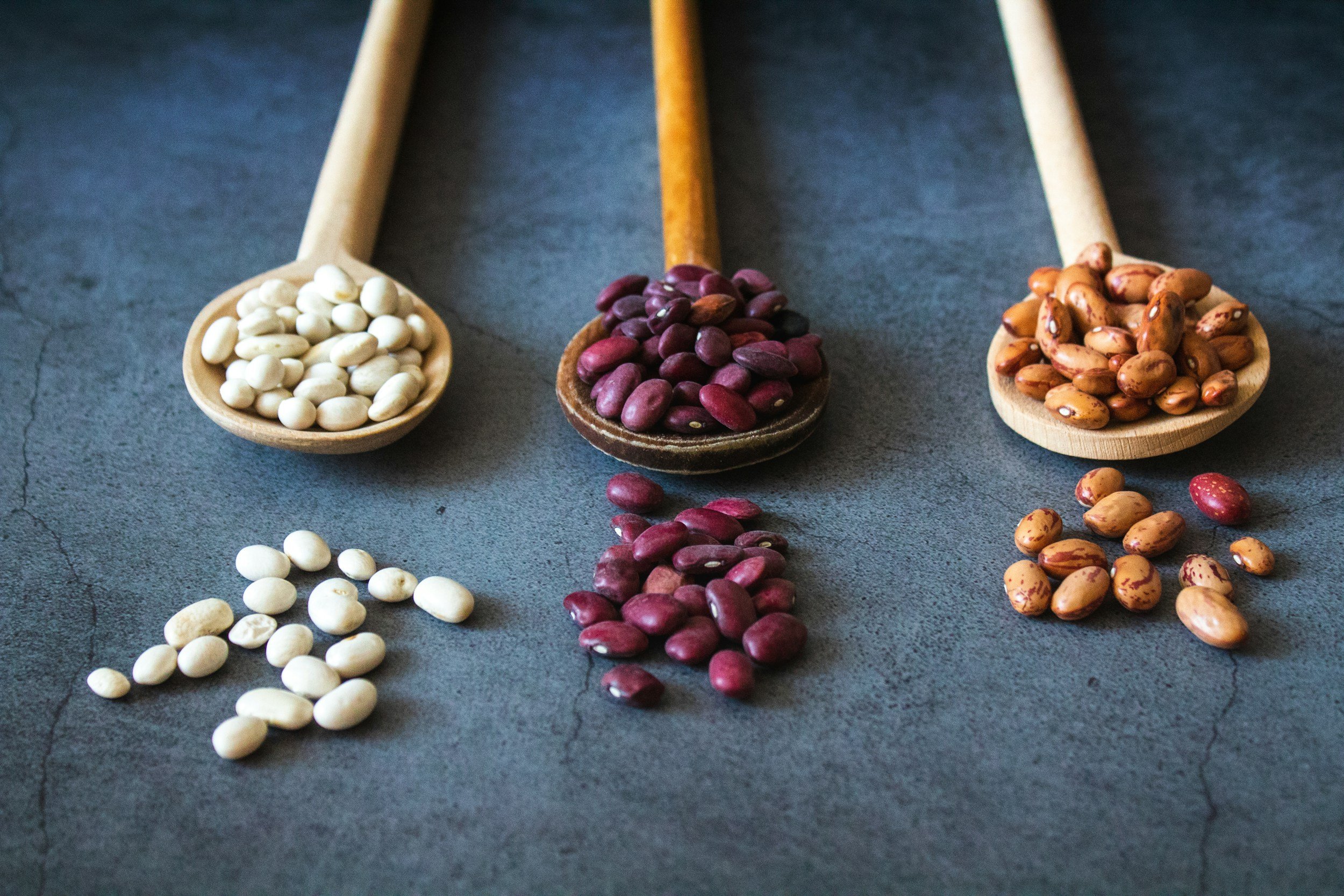
I have a theory. It is not a peer-reviewed, academically validated, empirically tested theory. It is the kind of theory that comes to you in the shower or halfway through an airport layover when your brain finally has room to breathe. Bear with me.
I call it the Bean Theory.

The Illusion of Freedom
I woke up this morning and was reflecting on Luke 10:28 and who it reveals us to be as people.
“Do this and you will live.” (Luke 10:28, ESV)
That statement forces a deeper question: what does it actually mean to pursue God with abandon?

Today is the Day
Have you ever had one of those conversations with someone that frees them and frees you, too? They are talking about something in their own realm of life that has no direct impact on you, but somehow it resonates so deeply with you that you can’t but thank God for the moment of wonder and insight?

Marriage is meant to be an Adventure.
We hang our hat on it for a thriving marriage. Why the boldness? Because adventures require commitment, dedication, courage, and tenacity. They force us to grow through challenges, testing our limits to see the extent of our capabilities. They are exciting, surprising, enjoyable, and (usually) a little terrifying. And so is marriage.

Anxious? Don’t Be
Every time I read this scripture, I actually giggle. Paul makes it so simple. Feeling anxious? Don’t be. Just pray. Anyone who has ever battled with anxiety realizes the source of my amusement. Anxiety is anything but simple.

You are not a Captive of Your Thoughts.
Sometimes we behave as if we are the victim of our thoughts. When we are in an unbalanced state, it is easy to allow our unbridled thoughts and feelings to guide our steps contrary to the direction in which we may desire to go. The longer we continue in the habit of believing that we have no control over our thoughts, the harder it is to reign them in and tame them again.