


What is the Luke 10:28 model?
In Luke 10:28, Jesus said, “Do this and you will live.”
But what was he referring to? Just one verse earlier, when answering a question about the greatest commandment, he said, “‘Love the Lord your God with all your heart and with all your soul and with all your strength and with all your mind’; and ‘love your neighbor as yourself.’”
Millennia later, science backs up the truth of this scripture.
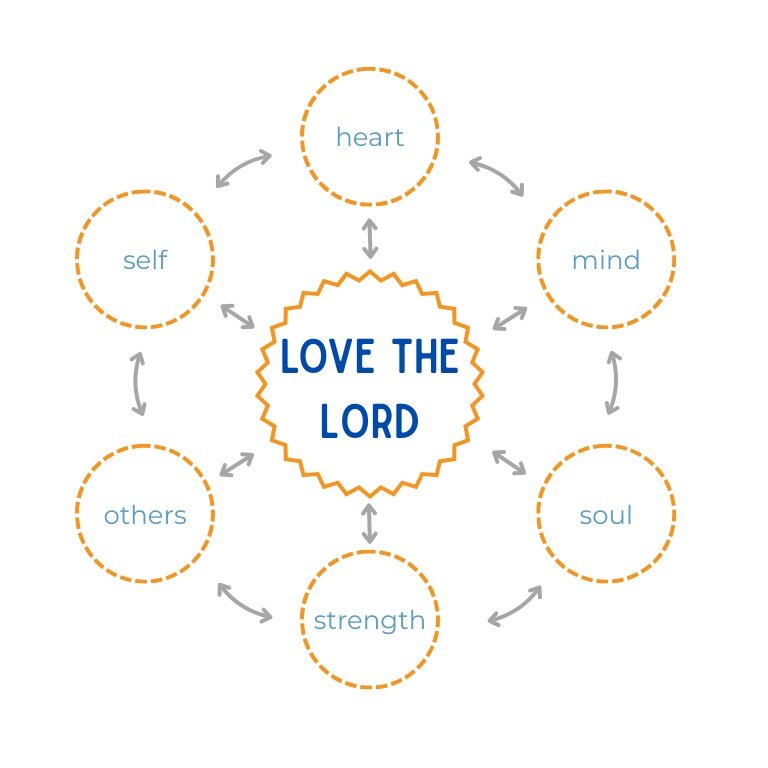
the 7 dimensions of wellness
It is commonly accepted among experts that there are between 6 and 8 dimensions of wellness. The science of wellness and well-being - what it means to live a flourishing life - is a growing sphere of research and application. What is fascinating is that so much of the current research is aligned with Luke 10:28.
The difference is that science seeks balance within these dimensions, while the bible points to a synergy of these dimensions that is grounded in one above all others: faith.
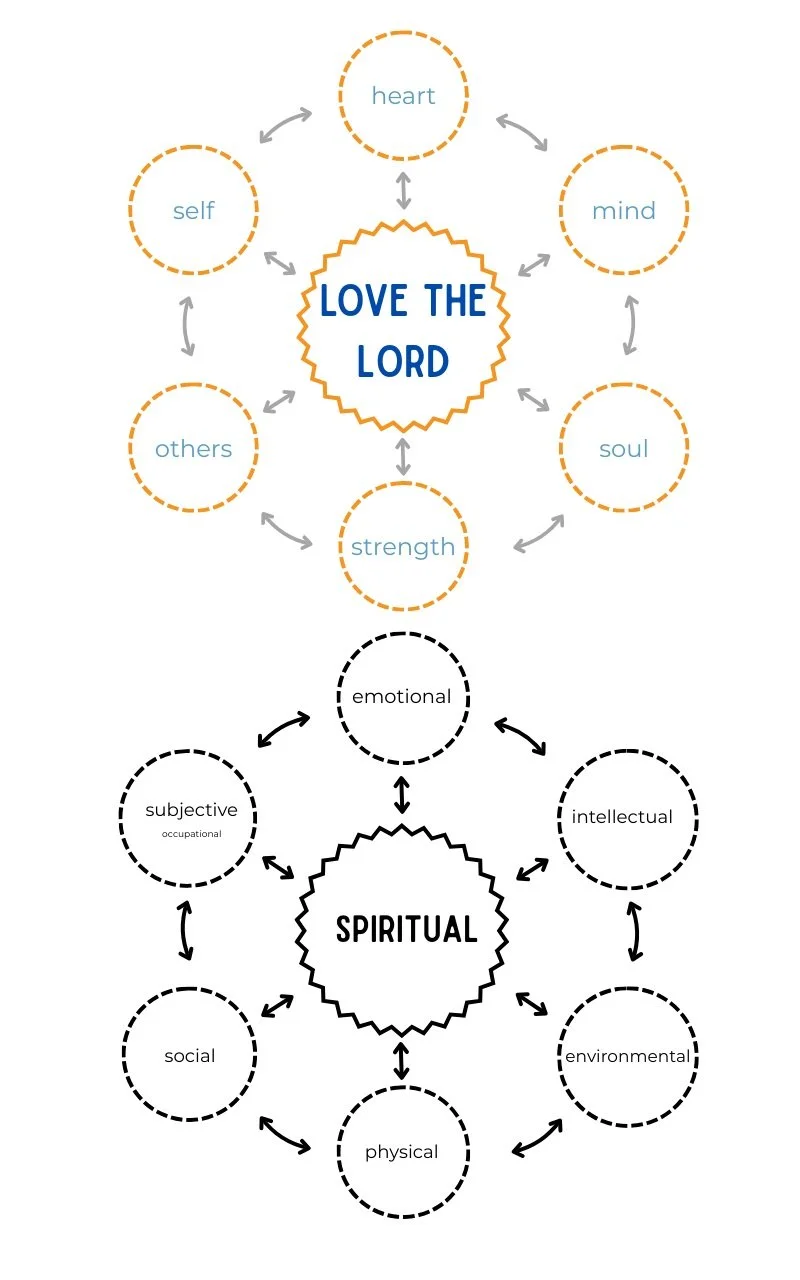
The Luke 10:28 project seeks to empower individuals, marriages, and communities to glorify God and live a thriving and flourishing life.

Heart (Emotional Well-being)
“Do not be anxious about anything, but in every situation, by prayer and thanksgiving, present your request to God. And the peace of God, which transcends all understanding, will guard your hearts and your minds in Christ Jesus.” -Phillippians 4:6-7
Mind (Intellectual Well-being)
“Do not conform to the pattern of this world, but be transformed by the renewing of your mind. Then you will be able to test and approve what God’s will is - his good, pleasing, and perfect will.” -Romans 12:2
Soul (Environmental and Vocational Well-being)
“For we are God’s handiwork, created in Christ Jesus to do good works, which God prepared in advance for us to do.” -Ephesians 2:10
Strength (Physical Well-being)
"So, whether you are eating or drinking, or whatever you are doing, do it all to the glory of God." -1 Corinthians 10:31
Love the Lord (Spiritual Well-being)
“I am the vine; you are the branches. If you remain in me and I in you, you will bear much fruit; apart from me you can do nothing.” John 15:5
Loving Others (Social Well-being)
"A new command I give you: Love one another. As I have loved you, so you must love one another. By this everyone will know that you are my disciples, if you love one another." -John 13: 34-35

Loving Myself (Subjective Well-being)
“I praise you because I am fearfully and wonderfully made; your works are wonderful, I know that full well.” -Psalm 139:14
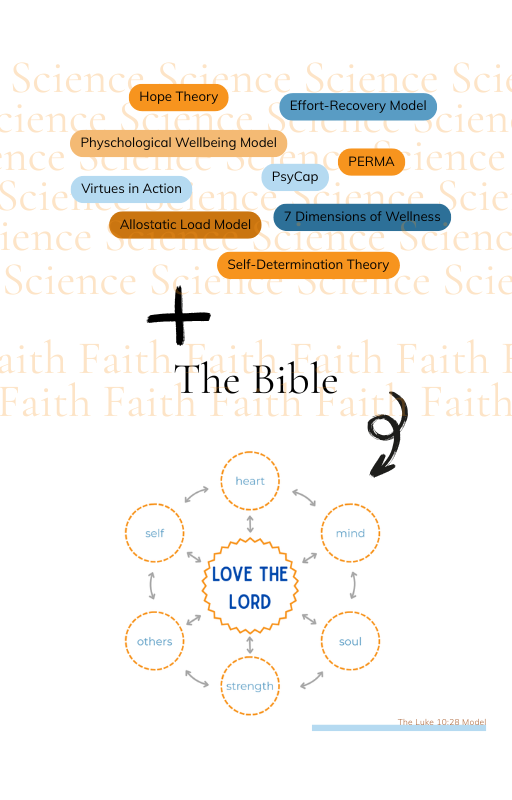
Positive Psychology is a branch of Psychology that is specifically devoted to understanding what helps humans thrive.
When we considered the theories and models in Positive Psychology, Psychology, Sociology, and Human Development that try to understand what helps humans grow, change, and flourish, we had a BIG realization:
A lot of it aligns with the Bible and God’s design for us!
The biggest difference, though, is the source. Positive Psychology posits that the highest levels of well-being occur when we have a strong internal locus of control (meaning we are in the driver’s seat) whereas the Bible tells us differently. Scripture tells us that we have an external locus of control (God’s sovereignty) and that we have some control over our lives, but ultimately, He is in the driver’s seat.
This difference means that instead of us getting to make all of the decisions and having our hope based on our choices, He has a plan for us and our hope is based on Him and His Goodness.
The Luke 10:28 Model is born out of this: the guidance that we find in Scripture and the practical applications that we get from research and science in well-being.
Many different scientific disciplines study wellness and well-being, and methods to improve it. Interestingly, there is also a lot of research about the impact of spirituality on well-being, but very few studies have looked at cross-disciplinary research to get a big picture.
Spirituality actually has a big impact. Research (Koenig, 2012) suggests that a strong religious or spiritual walk has a positive impact on:
Mental Health
the ability to cope with adversity (Resilience)
increased positive emotions
improved well-being and happiness
increased hope and optimism
increased meaning and purpose
higher self-esteem
positive character traits like agreeableness and conscientiousness
increased social support and social capital
Physical Health
increased exercise and healthy diet
increased longevity
lower coronary heart disease
Koenig, H. G. (2012). Religion, spirituality, and health: The research and clinical implications. International Scholarly Research Notices, 2012(1), 278730.